When Weave’s focus expanded from telecommunications to fintech, our CEO made it clear that Payments would be a primary driver of revenue and growth. I took a hard look at the Payments funnel and found significant friction: only 20.8% of deals attached Payments in 2024, and activation took ~11 days post–Closed/Won, requiring handoffs across three internal teams. For a capability as fundamental as getting paid, the experience was far too complex and operationally heavy.
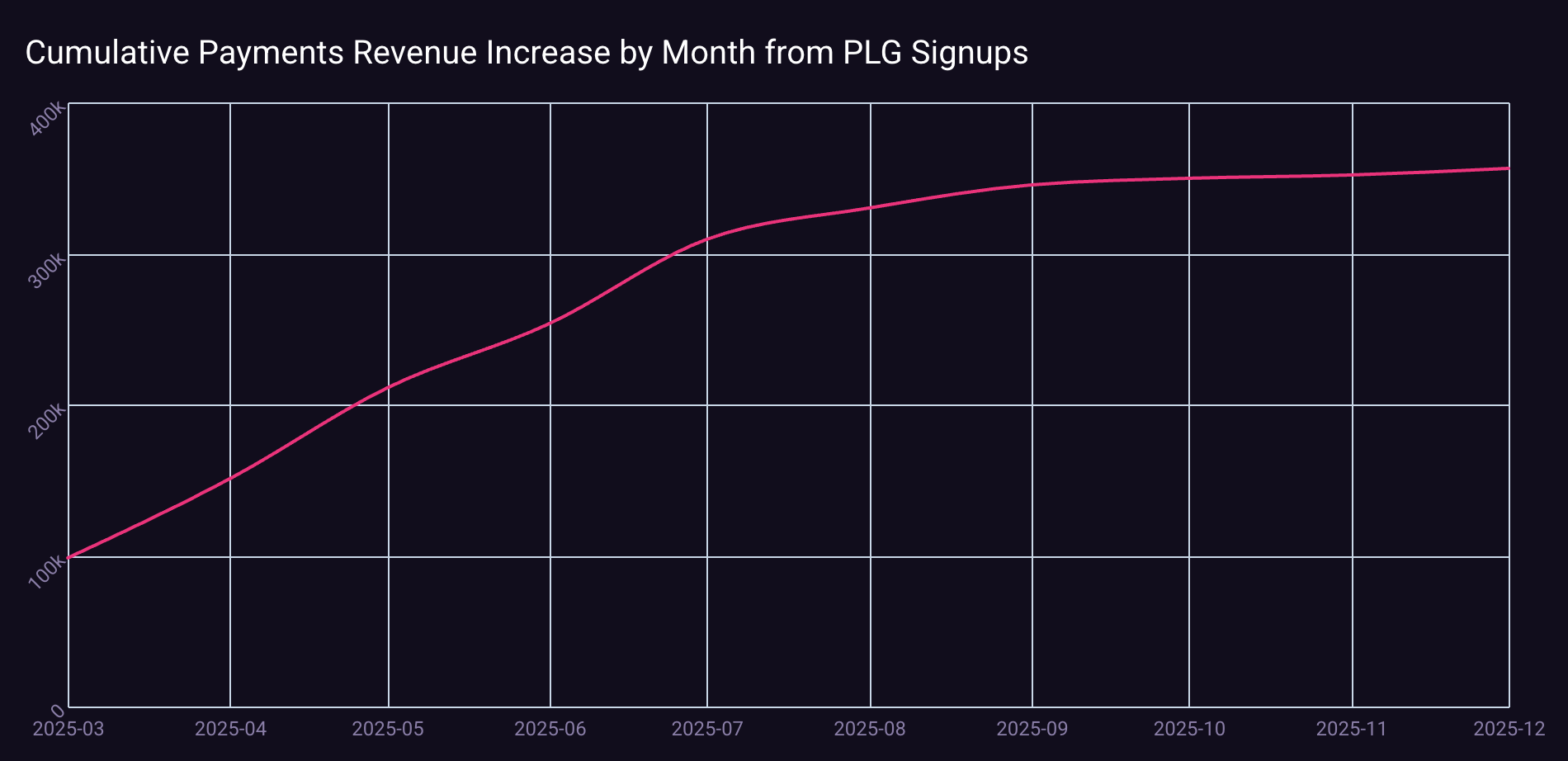
Partnering closely with Product and Engineering, I led the strategy to reframe Payments as a self-serve, product-led growth engine. We built in-app pathways that allowed customers to discover, sign up, and activate Payments without human intervention, using persistent prompts like dashboard banners and visible Payments actions even before activation. In the nine months following launch, these PLG surfaces drove 2,769 self-serve Payments activations, $48.8M in processing volume, and $361K in incremental revenue, proving that simplifying the experience unlocked both scale and meaningful business impact.
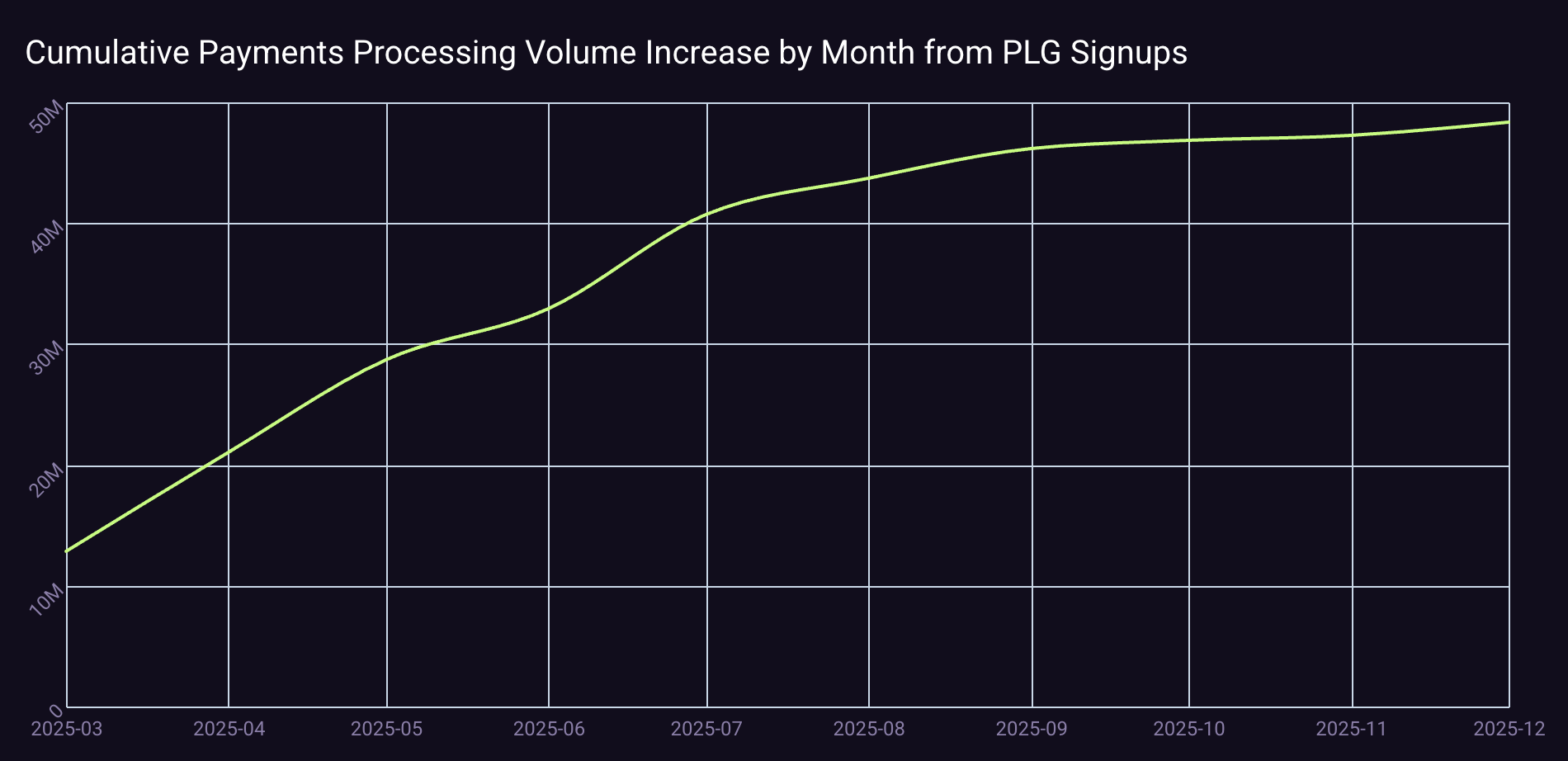
The shift to a self-serve, product-led Payments experience drove measurable, compounding impact on Weave’s Payments business. In the nine months following launch, PLG signups alone generated $48.8M in incremental processing volume and $361K in net-new revenue, with gains accruing steadily month over month as more customers activated without sales or onboarding involvement.
This PLG motion became a meaningful contributor to Weave’s broader Payments growth, helping lift median monthly processing volume and accelerate total annual volume. By embedding Payments discovery and activation directly into core workflows, we created a scalable growth engine that continued to compound over time, proving that thoughtful product surfaces could drive material revenue outcomes at scale.
The results speak for themselves.

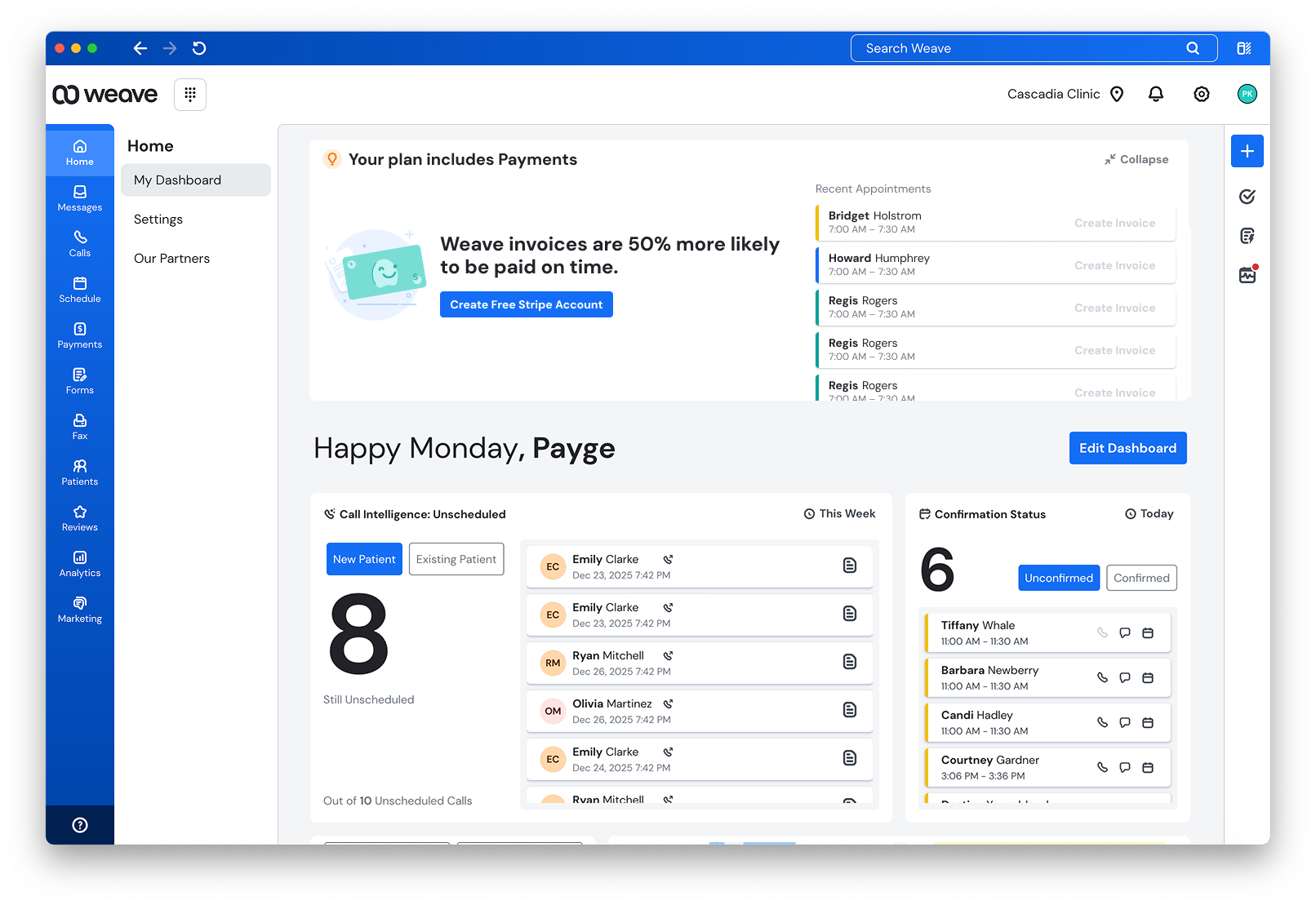
To drive self-serve adoption, we introduced a persistent dashboard prompt that appeared for every account without Payments activated. Rather than hiding setup behind settings or sales motions, Payments was placed front-and-center on the home dashboard (the most frequently visited surface in the product) making activation feel both inevitable and low-friction.
The prompt dynamically adapted to the user’s role. Admins were given a clear call to action to complete setup immediately, while non-admins were empowered to “nudge” their administrator, turning any user into a catalyst for activation without blocking their workflow. By keeping Payments visible, contextual, and actionable, even before activation, we normalized it as a core part of the product experience and removed the dependency on internal teams to move accounts forward.
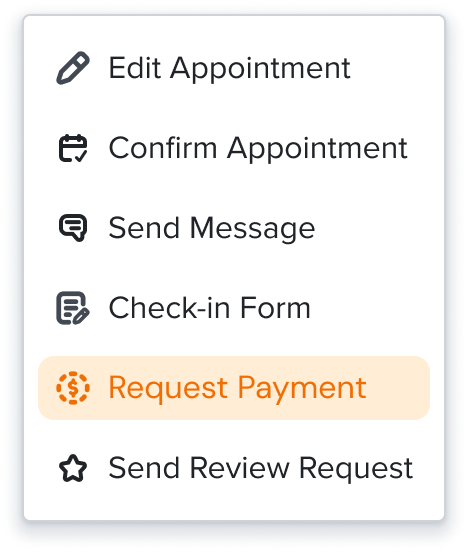
We reinforced Payments discovery by surfacing “Request Payment” directly inside high-intent action menus, even for accounts that hadn’t activated Payments yet. By placing Payments alongside everyday workflows like confirming appointments or sending messages, these contextual prompts drove awareness at the moment of need and resulted in 588 additional self-serve signups.